_01JMZ4H43P2JR7Z62M1XDT4TBF.png)
Hide Fomo based on CSS selectors🛠️
Maintaining a flawless user experience requires complete control over your site's visual layers. When a visitor is interacting with a high-intent layout element like a checkout drawer, a live chat console, or a full-screen mobile menu the last thing you want is for different widgets to fight for screen real estate.
Fomo’s CSS Selector Hiding Engine acts as an architectural open canvas. Instead of limiting you to basic URL-based rules, this feature allows Fomo to perform real-time DOM Observation. If a specific CSS class, ID, or attribute becomes active anywhere on your page, Fomo will gracefully step aside to eliminate Notification Friction through Page Rules and protect your layout harmony.
This master guide explores how developers, agency partners, and tech-savvy merchants can utilize advanced CSS selectors to map out an uncompromised user experience.
⚙️ The Technical Logic: How Fomo Observes Your DOM
Fomo doesn't just load statically; it remains aware of your site's state changes. When you define a target selector, Fomo routinely scans the page.
-
The Condition: If the specified element is detected in the HTML, or if a designated "active state" class is appended to your code, Fomo automatically applies a hidden property to itself.
-
The Return: As soon as the visitor closes that layer and the selector disappears, Fomo returns to its normal execution queue, preserving your Conversion Continuity.
🛠️ Where to Configure Selector Rules
To turn on advanced visibility rules, follow these steps in your Fomo control panel:
-
Log in to your Fomo dashboard.
-
Navigate to the Tab Rules.
-
Click on + Add a Rule, make sure to give it a proper title that would identify it,
-
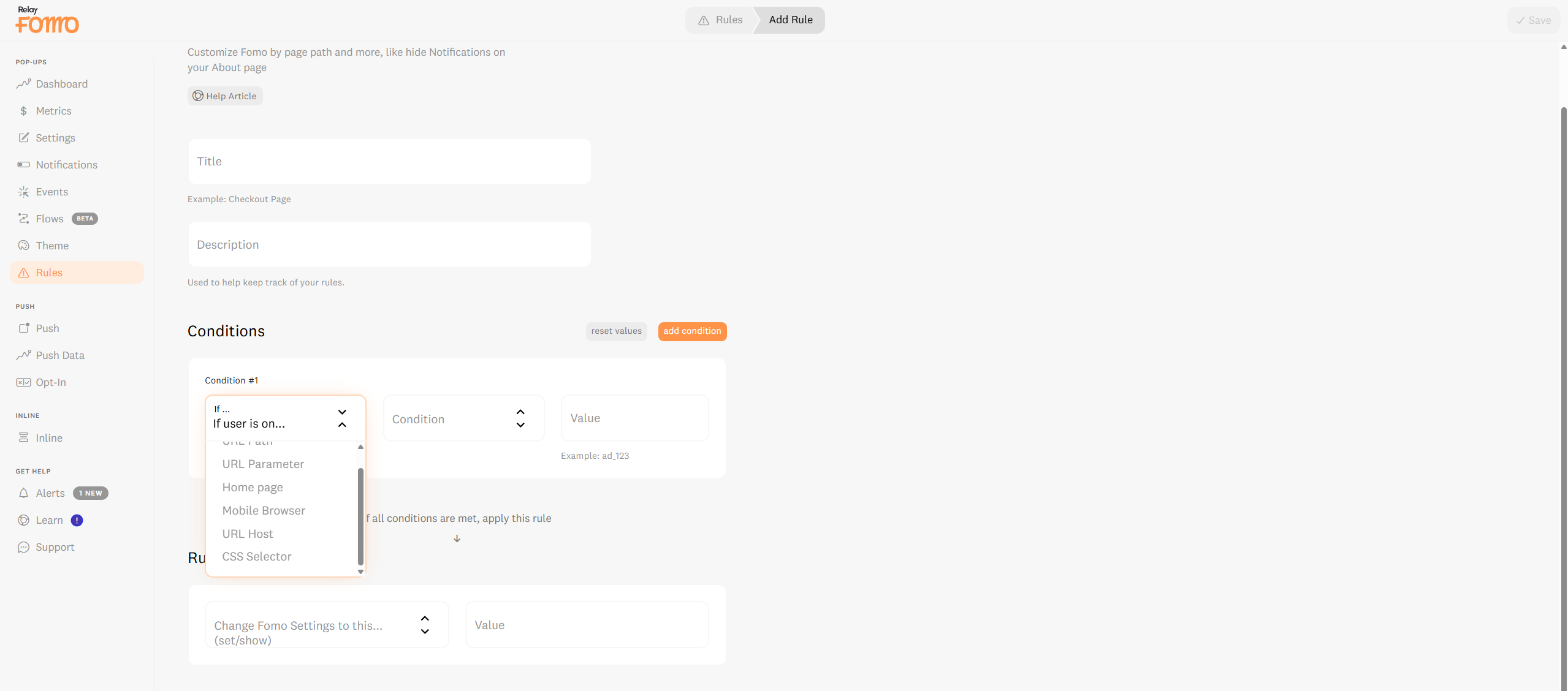
Now on the condition option click and Scroll down to the section labeled CSS selectors.
-
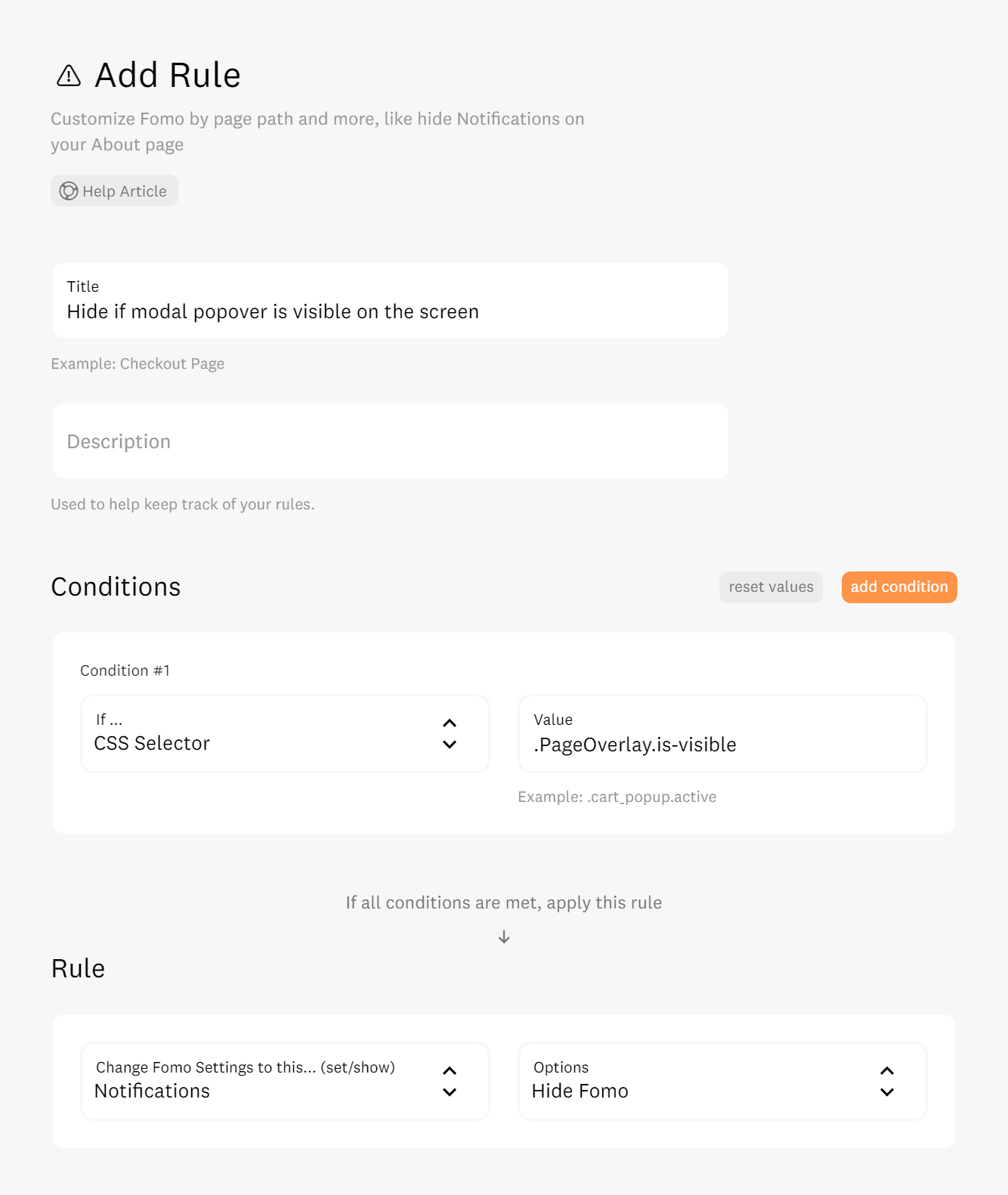
You can select either equal or contain we recommend equal and input your custom string (e.g.,
.modal-activeor#drawer-cart) into the field.
-
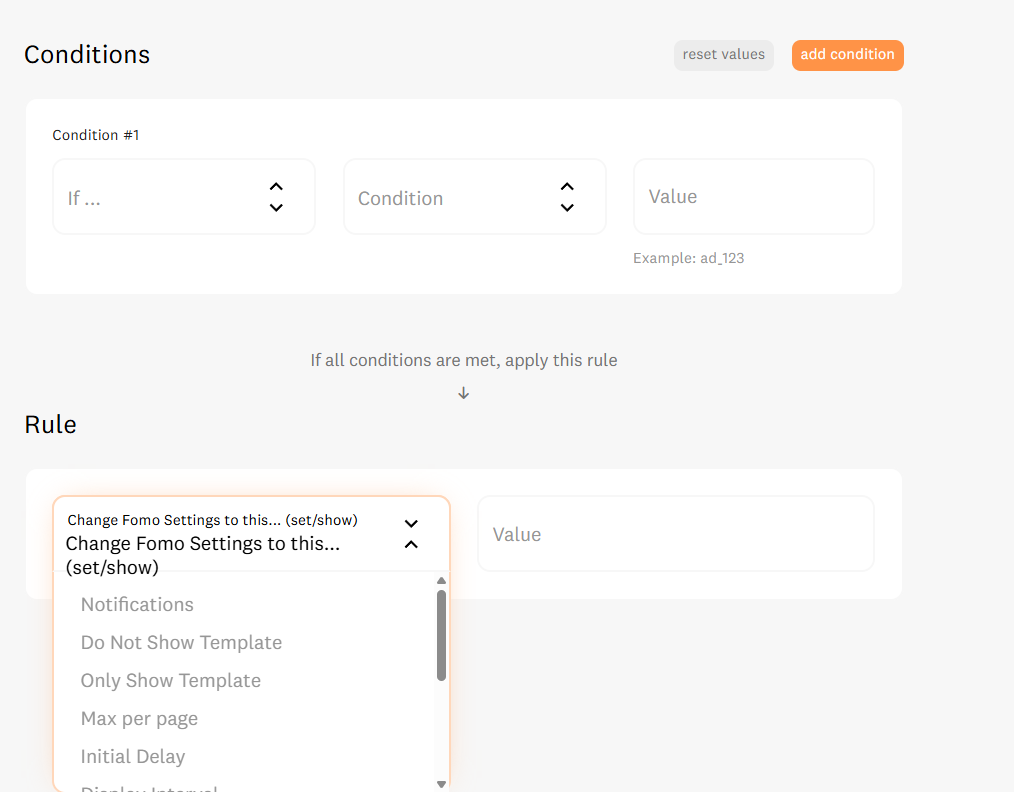
Then in the Rule step you can select Notifications > value: Hide Fomo,
-
Click Save on the top right corner of your screen.
🎨 The Open Canvas: 4 Creative Architectural Use Cases
Because this feature accepts any standard CSS selector query, you can build custom layout logic for almost any interactive layer on your site.
1. High-Engagement Live Chat Systems (Intercom, Zendesk, Gorgias)
Live chat widgets typically occupy the same bottom-left or bottom-right corners as Fomo notifications. To prevent visual overlap when a customer opens a conversation:
- The Selector: Target the active state wrapper of your chat tool (e.g.,
.gorgias-chat-openor#intercom-container .intercom-messenger-body). -
The Value: This guarantees that your social proof never obscures an active support dialogue, keeping the path to assistance clear.
2. Full-Screen Navigation & Mobile Menus
On smartphone viewports, a slide-out hamburger menu takes up the entire display. Showing background notifications over an active navigation system disrupts user flow.
- The Selector: Identify the state class your theme applies to the mobile layout when open (e.g.,
body.menu-openor.mobile-nav--active). -
The Value: Fomo automatically goes silent the moment a user starts exploring your navigation tree, restoring a clean mobile interface.
3. High-Interrupt Interstitials (Newsletter Popups & Promo Modals)
When a marketing popup launches, your visitor's attention is intentionally restricted to a single action. Adding secondary notifications under or over that modal creates visual noise.
- The Selector: Target your platform’s modal window or its dimming overlay background (e.g.,
.klaviyo-form-triggering,.fancybox-active, or#shopify-section-popup). -
The Value: It isolates the user's focus on your primary call-to-action without distracting peripheral movement.
4. Compliance Layers (Age Verification & Cookie Consents)
For industries requiring strict legal verification upon entry, notifications shouldn't fire before a user has even confirmed their eligibility to view the store.
- The Selector: Input the parent containment element of your compliance blocker (e.g.,
.age-gate-activeor#cookie-consent-banner). -
The Value: Fomo remains hidden until the visitor clears the compliance gate, ensuring your trust metrics only serve qualified traffic.
👉 Looking specifically to optimize your e-commerce slide-out cart experience? Check out our dedicated
Hide Fomo Notifications When a Drawer Cart is Open
🚀 Developer Best Practices: Selecting the Right Node
To make your structural overrides as resilient as possible, keep these engineering standards in mind:
-
Target State Rather Than Structure: Instead of targeting the element itself (which might always be hidden in the code via
display: none), try targeting the modifier class that your JavaScript appends when it is visible (e.g., look for.cart-drawer.is-openinstead of just.cart-drawer).
- Leverage Body Classes: Many modern e-commerce frameworks append a global class directly to the
<body>tag when a structural shift happens (likebody.template-cartorbody.drawer-active). These make for highly stable, high-level triggers. -
Test the Polling Interval: Fomo checks your DOM periodically. Ensure your interactive elements have clean, standardized CSS names that aren't dynamically randomized by script compilers during deployments.
🚀 We’re Here to Review Your Code Architecture
Fomo’s advanced selector utility is designed to give you enterprise-grade control over your user interface. If you are building a highly customized headless commerce build or handling complex layout structures, our engineering support team is happy to help you inspect your DOM hooks.
Email us at: hello@fomo.com
Work with an Integration Expert: have our team audit your cross-widget visibility rules and performance parameters. Pick the day and time here.🥳